History - Spanish/Mexican
The Mojaves first appear in the written record in the records of a Spanish expedition from New Mexico led by Juan de Onate in 1604, seeking the "southern sea". Having been told of the Amacava nation that lived on the Colorado River upstream from the junction of the Colorado and Gila rivers, (Onate sent Captain Geronimo Marquez and four soldiers up the river to make contact with this nation of hunter/gatherer and horticultural people. As a result, a Mojave leader named Curraca came two days later with 40 other Mojaves, bringing with them corn, beans, and gourds for the visitors. They not only welcomed the Spaniards and gave them directions for reaching the Gulf of California, but continued to provide them with food, and accompanied them until they reached the land of the "Bahacechas" (probably the Quechan), with whom they were friendly (Bolton 1925:268-273).During the ensuing 165 years, the Mojave had no further recorded direct contact with the Spaniards, but they continued to interact with their neighbors in New Mexico and eastern Arizona, and therefore were well aware of the continuing Spanish impact on these peoples. Such Spanish plants as wheat reached them through the Quechans and were added to their fields. They had also acquired a few horses through the Quechan (Sherer 1994:3; Stewart 1983:56).
In 1771, Father Francisco Garcés, a Franciscan priest stationed at Mission San Xavier (near present-day Tucson) who had traveled from there to the lower Colorado River and thence to its mouth in 1761, accompanied the expedition led by Captain Juan Bautista de Anza from Mexico to San Gabriel Mission in 1774, and in 1775 accompanied the second expedition led by Anza down the Gila River to its junction with the Colorado River. Splitting from this second expedition on December 4, 1775, Garcés, with three interpreters, spent two months visiting the Cocopas, Halchidhomas, and other peoples along the lower Colorado River. Because the Halchidhomas were at war with the Mojaves who lived to the north of their area, Garcés with his party on February 14, 1776, started on his own to visit the Mojaves, in the company of a Mojave whom he had met at Fort Yuma. On February 21, they met a party of 80 Mojaves traveling down the river. After they parted from the Mojave expedition, which continued down the river, Garcés and his party proceeded north and northeastward along the west side of the river. On the way, they met 40 Chemehuevi, whom Garcés described as living in the desert between the Mojave, the Beneme on the Mojave River to the west of the Colorado River, and the Utes to the northeast. They gave Garcés a gift of mescal and considerable information about their neighbors (Galvin 1967:14-32).
Garcés finally arrived at a place across the Colorado River from the Mojave villages on February 28. The Mojave captain who accompanied him from Fort Yuma went across to the villages and brought back some 2,000 Mojaves to visit him during the course of his stay. The Mojaves made a very favorable impression on the priest, and he reported that they were enthusiastic about being baptized. The visitors included three captains, one of whom was the "foremost of the nation; without him nothing is decided". Garcés noted that there were many children and young people, in contrast to the other groups living along the river (1967:33-34).
When Garcés expressed his intent to visit the fathers living on the coast, the Mojaves offered to guide the party. The party started for the coast on March 1, and traveling three leagues to the northwest, "accompanied by the principal captain of the Jamajabs, reached the rancheria where the captain lived, said to have been in the center of Mojave territory" (Galvin 1967:33-36; Sherer 1994:6-7).
We are dependent on what Garcés recorded for what is known about the Mojave way of living in the eighteenth century. Despite the enthusiasm of the Mojave for baptism expressed to and recorded by Garcés, the Spanish made no attempt to establish a mission among them. No other non-Indian left a written or known oral record of visiting them between 1776 and 1826. During this fifty-year period, the Mojaves were by no means completely isolated from what was going on among their neighbors. As the end of the eighteenth century approached, the Franciscan missions along the coast of California were reaching further and further inland for Indians to baptize and bring into the mission system. A considerable number of those already baptized and thus brought under the control of the system rebelled against the mission fathers' tight control, and ran away. Some of them joined their relatives in the San Jacinto and San Bernardino mountains, but others reached the Mojave settlements on the Colorado River. By 1810 sufficient sentiment against the missions had been stirred up that the Mojaves participated in and may have been leaders of an attack on Mission San Gabriel.
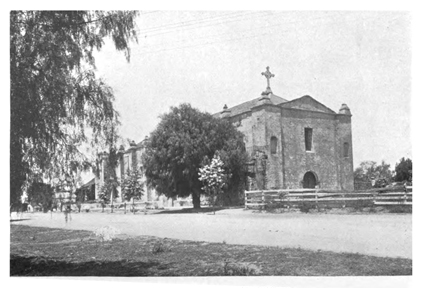
Mission San Gabriel - photo by A.C. Vroman
Historical Sketch of the California Indians
- The Mission Period
Throughout the 16th Century, Spain held much of the New World in its own control. After the defeat of the ...
- The Mexican Period
While Mexico had granted citizenship and protection to Indians under the Plan of Iguala, it continued the Spanish tradition of viewing indigenous people as ...
- Fr. Francisco Garces
... he explored the Gila and Colorado River Valleys, both down the Colorado to the Gulf of California and up it to the Grand Canyon and ...
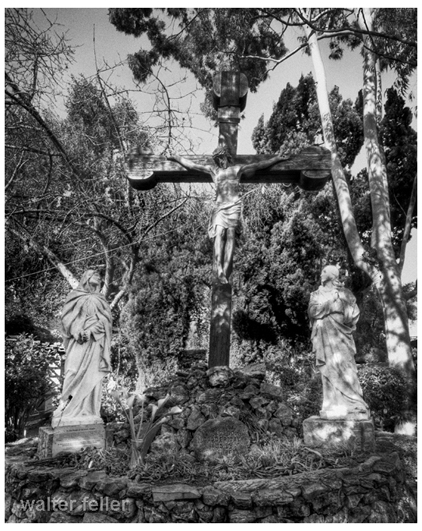
Mass Indian grave - Mission San Gabriel